Women's Rights in the United States: A Plain-Language Guide
Which law protects you at the ballot box, at work, at school, at the bank and at home, what each one actually does, and what changed in 2025 and 2026.

Women's rights in the United States are not written down in one place. They are spread across a constitutional amendment, a dozen federal laws, and a handful of Supreme Court rulings, each passed or decided in a different decade for a different reason. That makes it hard to answer a simple question: what am I actually protected from, and by what?
This guide is a map. It goes through the main areas of life, from voting to work to school to money to health to safety, and for each one it names the law, the year, and what it does in one or two plain sentences. Then it covers what changed in 2025 and 2026, because a lot has. It ends with the piece that is still missing.
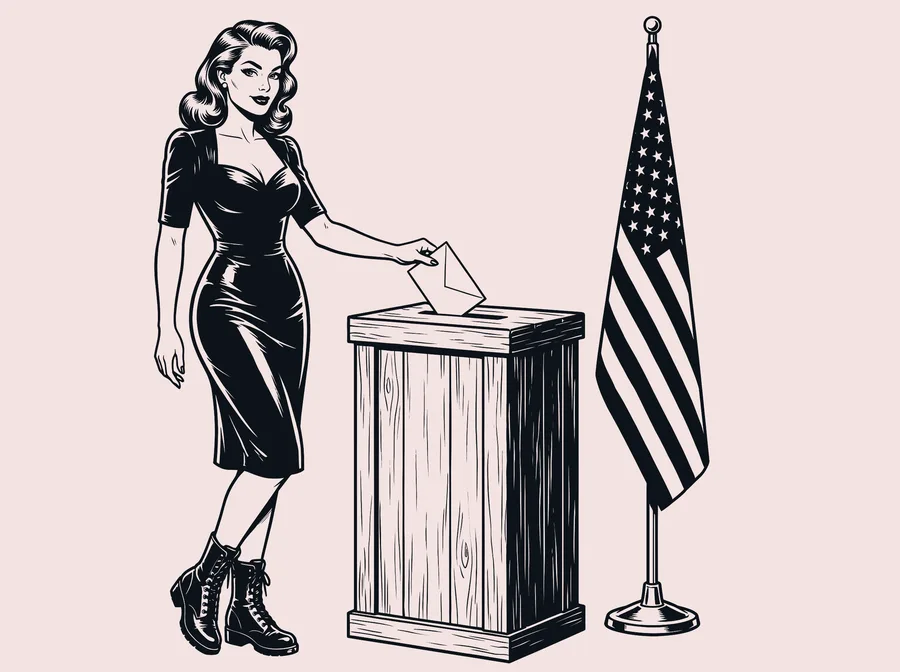
Voting: the 19th Amendment (1920)
The 19th Amendment says the right to vote cannot be denied or limited "on account of sex," by the federal government or by any state. Tennessee became the 36th state to ratify it on August 18, 1920, which made it part of the Constitution, and it was formally certified on August 26, 1920 (National Archives).
It is one of the few women's rights written directly into the Constitution. It did not, in practice, open the vote to every woman in 1920. Many Black, Native American, Asian American and Latina women were kept from voting for decades longer by other laws and practices, until later laws such as the Voting Rights Act of 1965.
Work and pay
Most of the rights women rely on day to day are workplace rights, and most of them come from Congress.
Equal Pay Act (1963)
Signed June 10, 1963, the Equal Pay Act requires employers to pay men and women equally for substantially equal work in the same workplace. The jobs do not have to be identical, but the skill, effort, responsibility and working conditions have to be substantially the same (EEOC).
Title VII of the Civil Rights Act (1964)
Signed July 2, 1964, Title VII bans employers with 15 or more employees from discriminating based on sex in hiring, firing, pay, promotions and other terms of a job (EEOC). Sexual harassment counts as sex discrimination under Title VII. It is the law most workplace discrimination cases are built on.
Pregnancy Discrimination Act (1978)
Signed October 31, 1978, the Pregnancy Discrimination Act amended Title VII to say that discrimination because of pregnancy, childbirth or related medical conditions is sex discrimination (EEOC). An employer cannot fire you or refuse to hire you because you are pregnant.
Family and Medical Leave Act (1993)
Signed February 5, 1993, the FMLA gives eligible workers up to 12 weeks of unpaid, job-protected leave a year for the birth or adoption of a child, their own serious health condition, or caring for a family member (U.S. Department of Labor). It is unpaid leave, and not every worker qualifies: you generally need to have worked for a covered employer for at least 12 months.
Lilly Ledbetter Fair Pay Act (2009)
Signed January 29, 2009, this law says the clock for filing a pay discrimination complaint restarts with each paycheck affected by the discrimination (EEOC). It is named for Lilly Ledbetter, who learned she had been underpaid for years only after the deadline to complain had passed.
Pregnant Workers Fairness Act (2023)
In effect since June 27, 2023, the PWFA requires employers with 15 or more employees to make reasonable accommodations for known limitations related to pregnancy, childbirth or related conditions, unless it would cause undue hardship (EEOC). That can mean more breaks, a stool to sit on, a schedule change, or time off for appointments. Before this law, many pregnant workers had no clear right to these changes.
| Law | Year | What it protects |
|---|---|---|
| Equal Pay Act | 1963 | Equal pay for substantially equal work |
| Title VII, Civil Rights Act | 1964 | No sex discrimination in hiring, firing, pay or promotion; covers harassment |
| Pregnancy Discrimination Act | 1978 | Pregnancy discrimination counts as sex discrimination |
| Family and Medical Leave Act | 1993 | Up to 12 weeks of unpaid, job-protected leave for eligible workers |
| Lilly Ledbetter Fair Pay Act | 2009 | Deadline to file a pay complaint resets with each unequal paycheck |
| Pregnant Workers Fairness Act | 2023 | Reasonable accommodations for pregnancy-related limitations |
School: Title IX (1972)
Signed June 23, 1972, Title IX bans sex discrimination in any education program that receives federal money, which covers almost every public school and college and most private colleges (U.S. Department of Justice). It applies to admissions, athletics, financial aid, and how schools respond to sexual harassment and assault.
The law itself is short. Most of the detail lives in regulations written by the Education Department, and those regulations have changed several times. See the 2025 and 2026 changes below.
Money and credit: the Equal Credit Opportunity Act (1974)
Until the 1970s, many banks would not give a woman a credit card or a loan without a husband's or father's signature. The Equal Credit Opportunity Act, signed October 28, 1974, made it illegal for lenders to discriminate based on sex or marital status (U.S. Department of Justice). Later amendments added race, religion, national origin, age and other protections. If you were turned down for credit, you have the right to know why.
Health and family
Griswold v. Connecticut (1965)
Decided June 7, 1965, by a 7 to 2 vote, Griswold struck down a state law banning contraception and recognized a constitutional right to privacy for married couples (Oyez). Later cases extended access to contraception to unmarried people.
Dobbs v. Jackson Women's Health Organization (2022)
Decided June 24, 2022, Dobbs overturned Roe v. Wade and Planned Parenthood v. Casey and held that the Constitution does not protect a right to abortion (Supreme Court opinion). In practice, this means each state now sets its own abortion law. What is legal depends on where you live, and state laws have kept changing since 2022. There is no single federal answer.
Safety: the Violence Against Women Act (1994)
Signed September 13, 1994, VAWA funds the national response to domestic violence, dating violence, sexual assault and stalking, including shelters, legal help, and training for police and courts. It has to be renewed by Congress. The most recent reauthorization, signed March 15, 2022, authorizes its programs through fiscal year 2027, which ends September 30, 2027 (Congressional Research Service).
If you need help now, the National Domestic Violence Hotline is free, confidential and open 24/7: call 1-800-799-7233 or text START to 88788.
What changed in 2025 and 2026
Several of these protections shifted in the last two years, through court rulings and new federal rules. Here is what happened, without spin.
| Area | What happened | When |
|---|---|---|
| Title IX | A federal court vacated the 2024 Title IX rule nationwide in Tennessee v. Cardona. The Education Department then formally repealed it and largely restored the 2020 rules. | Jan 9, 2025; Sept 29, 2026 |
| Pregnant Workers Fairness Act | A federal court in Louisiana struck the part of the EEOC rule requiring accommodation for elective abortions and ordered the EEOC to revise it. The rest of the rule stands. | May 21, 2025 |
| Title VII | In Ames v. Ohio Department of Youth Services, the Supreme Court ruled 9 to 0 that people from a majority group bring discrimination claims under the same standard as everyone else. | June 5, 2025 |
| Medicaid and Planned Parenthood | In Medina v. Planned Parenthood South Atlantic, the Court ruled 6 to 3 that Medicaid patients cannot sue to enforce their choice of provider, so states may exclude Planned Parenthood from Medicaid. | June 26, 2025 |
| School sports | In West Virginia v. B.P.J. and Little v. Hecox, the Court ruled 6 to 3 that neither Title IX nor the Equal Protection Clause requires schools to let students compete on teams by gender identity rather than biological sex, upholding state laws. | June 30, 2026 |
| VAWA | VAWA programs are currently authorized through fiscal year 2027. | Expires Sept 30, 2027 |
Title IX
In 2024, the Education Department issued a new Title IX rule that, among other things, defined sex discrimination to include gender identity and changed how schools handle harassment complaints. On January 9, 2025, a federal court in Kentucky vacated that rule nationwide in Tennessee v. Cardona. On September 29, 2026, the department published a final rule that formally repealed the 2024 rule and largely restored the 2020 regulations (Federal Register). For students, that means the 2020 rules on how schools investigate sexual harassment, including live hearings at colleges, are back in effect.
Pregnant Workers Fairness Act
The law still stands. On May 21, 2025, a federal court in Louisiana vacated the part of the EEOC's rule that required employers to accommodate elective abortions and ordered the agency to revise the rule. The rest of the rule, including accommodations for pregnancy, childbirth and recovery, remains in effect. The EEOC regained a voting quorum on October 7, 2025, and a revision of the rule is expected (National Law Review).
Supreme Court rulings
Ames v. Ohio Department of Youth Services (June 5, 2025) was unanimous. The Court said that a plaintiff from a majority group does not have to meet a higher bar to prove discrimination under Title VII (Supreme Court opinion). The same standard applies to every worker.
Medina v. Planned Parenthood South Atlantic (June 26, 2025) held that Medicaid patients cannot sue a state to enforce the part of federal Medicaid law that lets them choose any qualified provider (Supreme Court opinion). In practice, states may remove Planned Parenthood from their Medicaid programs, which affects where low-income patients can get birth control, cancer screenings and other care.
West Virginia v. B.P.J. and Little v. Hecox (June 30, 2026) upheld state laws limiting girls' and women's school sports teams to students whose biological sex is female (Supreme Court opinion). Supporters say the laws protect fairness and safety in women's sports. Opponents say they exclude transgender girls from school life. The ruling means states may keep or pass such laws; it does not require them to.
The missing piece: the Equal Rights Amendment
The Equal Rights Amendment says, in full: "Equality of rights under the law shall not be denied or abridged by the United States or by any State on account of sex." Congress passed it in 1972 and set a deadline for states to ratify it, later extended to 1982.
By 2020, when Virginia ratified it, 38 states had approved the ERA, the number usually needed to amend the Constitution. Five states had earlier voted to rescind their approval. On December 17, 2024, the Archivist of the United States said the ERA cannot be certified, citing the ratification deadline, Justice Department legal opinions and court rulings (National Archives). On January 17, 2025, President Biden said he considered it the law of the land, but the White House said he would not direct the Archivist to publish it (Michigan Public).
So its legal status is unresolved. Until a court or Congress settles it, there is no explicit guarantee of sex equality in the Constitution. Most protections described in this guide come from laws that Congress can change and rulings that courts can revisit.
Where to go next
- Need help with a specific problem? Start with our Resources page and the Find Help directory.
- Want the history behind these laws? Read What Is Hysteria, our look at how medicine dismissed women for centuries.
- Facing bias at work? Read Gender Bias: Women's Ideas vs. Men's Insights.
We will keep this page current as laws and rulings change.
Questions people ask
What are women's rights in the United States?
They are the legal protections women have under the Constitution, federal laws and court rulings. The main ones cover voting (19th Amendment), equal pay (Equal Pay Act), freedom from job discrimination (Title VII), pregnancy at work (Pregnancy Discrimination Act and Pregnant Workers Fairness Act), education (Title IX), credit (Equal Credit Opportunity Act), family leave (FMLA) and safety from violence (VAWA).
Is there an Equal Rights Amendment in the Constitution?
Not officially. 38 states have ratified the ERA, but the Archivist of the United States has declined to certify it, citing the 1982 ratification deadline. Its legal status is unresolved.
Is abortion a federal right?
No. Since Dobbs v. Jackson in June 2022, the Constitution is not read to protect a right to abortion, and each state sets its own abortion law.
Do I have a right to paid maternity leave?
Not under federal law. The FMLA gives eligible workers up to 12 weeks of unpaid, job-protected leave. Some states and employers offer paid leave.
What should I do if I think I'm being discriminated against at work?
Write down what happened, when, and who was involved, and keep copies of pay stubs and emails. You can file a charge with the U.S. Equal Employment Opportunity Commission at eeoc.gov, usually within 180 or 300 days depending on your state. A lawyer or legal aid organization can help you decide on next steps.
Sources and further reading
- 19th Amendment, National Archives
- Equal Pay Act of 1963, U.S. Equal Employment Opportunity Commission
- Title VII of the Civil Rights Act of 1964, EEOC
- Griswold v. Connecticut (1965), Oyez
- Title IX, U.S. Department of Justice
- Equal Credit Opportunity Act, U.S. Department of Justice
- Pregnancy Discrimination Act of 1978, EEOC
- Family and Medical Leave Act, U.S. Department of Labor
- Violence Against Women Act reauthorization, Congressional Research Service
- Lilly Ledbetter Fair Pay Act of 2009, EEOC
- Dobbs v. Jackson Women's Health Organization (2022), Supreme Court of the United States
- What You Should Know About the Pregnant Workers Fairness Act, EEOC
- Recodification of Title IX Rules (2026), Federal Register
- Ames v. Ohio Department of Youth Services (2025), Supreme Court
- Medina v. Planned Parenthood South Atlantic (2025), Supreme Court
- West Virginia v. B.P.J. (2026), Supreme Court
- National Archives statement on the ERA (2024)
- Biden says the Equal Rights Amendment is law (2025), Michigan Public
- EEOC quorum and the Pregnant Workers Fairness Act, National Law Review
How to cite this article
On the Shoulders of Medusa. (2026). Women's Rights in the United States: A Plain-Language Guide. https://ontheshouldersofmedusa.com/article/womens-rights-united-states/