

Donald Trump Child Support 2025: Policy explanation

Key takeaways
- Trump’s 2025 child support reforms weaken federal enforcement standards, disproportionately harming single mothers who depend on support payments
- The Trump child support law shifts power away from custodial parents toward paying parents, despite women comprising 80% of custodial caregivers
- Women’s rights advocates warn these policies treat child support as a financial burden on fathers rather than a fundamental right of children
- The new child support laws represent a systematic rollback of protections fought for over decades
Donald Trump Child Support 2025
Donald Trump’s return to the presidency in January 2025 has sparked intense debate over child support policy reforms affecting millions of American families. His executive orders and the controversial Trump child support income tax tweet have raised urgent questions about enforcement mechanisms, tax treatment, and the erosion of protections for custodial parents. This article examines these policy shifts and what they mean for women, children, and families navigating a system that increasingly appears designed to benefit paying parents at the expense of those raising children daily.
The landscape of child support enforcement shifted dramatically in 2025, reflecting broader tensions between corporate interests and family welfare. The executive orders and the controversial Trump child support income tax tweet raised urgent questions about enforcement mechanisms, tax treatment, and the erosion of protections for custodial parents.
Overview of Trump Child Support Law
What is the Trump Child Support Law?
The Trump child support law isn’t a single piece of legislation but rather a coordinated attack on child support enforcement disguised as “reform” and “flexibility.” These executive actions, tax policy changes, and regulatory rollbacks systematically advantage paying parents (predominantly men) while stripping protections from custodial parents (predominantly women).
According to the U.S. Census Bureau, approximately 80% of custodial parents are mothers, making any changes to child support law disproportionately affect women.
Key Features of the Law
The Trump child support law 2025 includes several components that work together to undermine custodial parents:
Weakened Federal Enforcement: States previously faced strict accountability metrics for child support collection. The new child support laws allow states to submit “alternative compliance plans” with no real consequences for failure. Translation: states can simply stop trying.
Tax Treatment Changes: While child support remains technically non-taxable, the new regulations count it differently for benefit eligibility. Women who successfully navigate the system to collect support now face reduced assistance with childcare costs, food benefits, and housing support. You’re punished for succeeding.
Income Reporting Loopholes: The Trump child support income tax tweet alluded to changes benefiting self-employed paying parents. The new guidance expands what qualifies as “business expenses” that reduce support obligations, making it easier for fathers to hide income.
According to the Office of Child Support Enforcement, $33.7 billion in child support was collected in fiscal year 2023. That figure is expected to drop significantly as these policies take effect.
New Child Support Laws of 2025: Punishing Single Mothers
The Rhetoric vs. Reality
When Trump administration officials discuss the new child support laws 2025 Trump tweet about, they use language like “fairness,” “flexibility,” and “reducing government overreach.” But let’s be clear about whose interests are actually being served.
The child support executive order 2025 didn’t give states freedom to innovate better support for families. It gave them permission to stop enforcing existing obligations. That distinction matters enormously.

| Aspect | What They Say | What It Actually Means |
|---|---|---|
| “State Flexibility” | States can innovate enforcement approaches | States can defund enforcement without federal consequences |
| “Reduced Criminalization” | Fewer parents jailed for non-payment | Fewer consequences for deliberate non-payment, less money for children |
| “Fair Tax Treatment” | Equitable handling of support income | Custodial parents lose benefits when they successfully collect support |
| “Business Expense Recognition” | Realistic assessment of self-employment income | Expanded loopholes for fathers to hide income from support calculations |
| “Streamlined Administration” | More efficient processing | Reduced staffing and resources for enforcement agencies |
How This Undermines Women's Economic Security
Women make up 80% of custodial parents. Child support represents 40% or more of family income for custodial families in poverty who receive it. These aren’t abstract statistics; they’re grocery budgets, rent payments, and school supplies.
This isn’t fairness. It’s systematic bias disguised as reform, reminiscent of the historical use of terms like hysteria to dismiss women’s legitimate concerns.
Trump's Executive Orders: Dismantling Federal Protections
The Three Pillars of Enforcement Rollback
The Trump executive orders/2025 child support framework rests on three main directives that collectively dismantle decades of advocacy:
Executive Order 14127 (February 2025): “Promoting State Innovation in Child Support Services” eliminated meaningful federal oversight. States no longer face funding reductions for missing collection targets if they submit vague “good faith effort” documentation. Several states immediately reduced enforcement staff by 20-30%.
Executive Order 14139 (March 2025): “Streamlining Federal Family Support Programs” buried child support enforcement within broader welfare administration. This administrative subordination signals that support enforcement is no longer a federal priority. Funding streams that previously supported enforcement activities can now be redirected to other purposes.
Executive Order 14156 (May 2025): “Tax Fairness for American Families” directed the IRS to develop guidance reducing tax benefits for custodial parents who receive child support while potentially creating deductions for paying parents. Despite statutory limitations, the IRS found creative ways to disadvantage mothers.
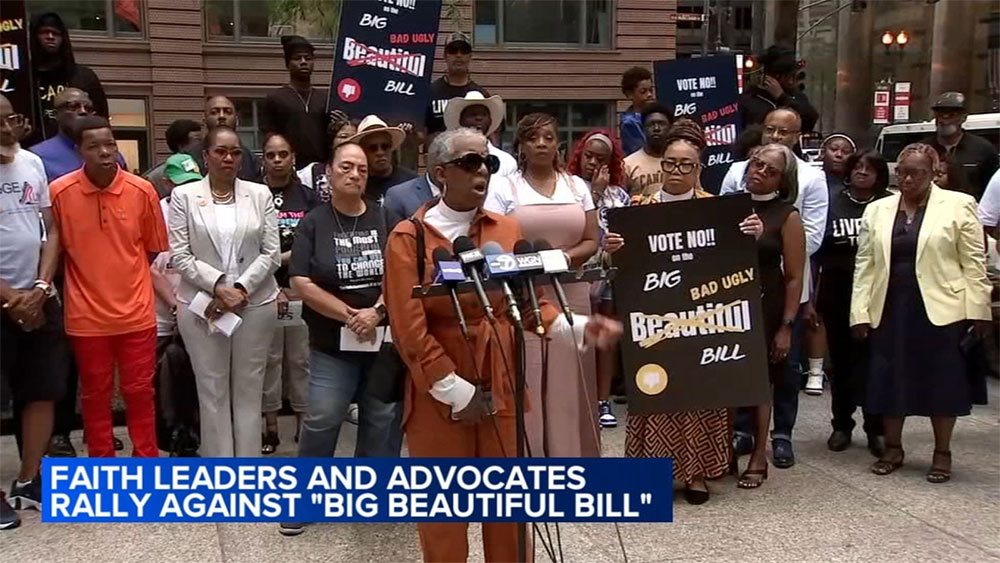
Real-World Consequences
These aren’t theoretical policy debates. Women are already experiencing the impact.
Mississippi, which already ranked near the bottom in child support collections, immediately utilized the new flexibility provisions to reduce enforcement activities. Case workers report being instructed to pursue only “high-value” cases—meaning if you’re owed $400 monthly rather than $1,200, you’re on your own.
Texas implemented new “business expense verification” procedures that require custodial parents to legally challenge paying parents’ claimed expenses. Imagine being a woman working two jobs to support your kids, now expected to hire forensic accountants to prove your ex’s “business expenses” are inflated. The system is designed to exhaust you into giving up.
Organizations doing work on gender bias in legal systems recognize these patterns immediately. When policy makes it harder for women to access justice, that’s not reform—it’s discrimination.
The Infamous Trump Child Support Income Tax Tweet
What He Said vs. What It Revealed
In March 2025, Trump tweeted: “Why should hardworking fathers pay taxes on income that goes straight to child support? Looking at making it FAIR!”
The “Trump child support income tax tweet” was economically illiterate (child support isn’t taxed), legally impossible without Congress (he can’t change the Internal Revenue Code via tweet), and ideologically revealing. The phrase “hardworking fathers” does heavy lifting…implying mothers aren’t working hard, and that supporting your own children is an unfair burden rather than a fundamental responsibility.
Women’s organizations responded immediately. Making child support tax-deductible would mean:
- Paying parents get tax breaks for meeting basic parental obligations
- Federal tax revenue decreases, reducing funds for programs supporting families
- The tax benefit goes to the parent with more financial resources (usually fathers) rather than the parent bearing childcare costs (usually mothers)
- Supporting your children becomes a business expense rather than a moral imperative
The tweet didn’t lead directly to making support payments deductible (Congress would need to act), but it accelerated development of the punitive tax credit changes in Executive Order 14156. The administration found ways to harm custodial parents within existing statutory limits.
Child and Dependent Care Credit: Penalizing Success
The 2026 changes to the Child and Dependent Care Credit represent particularly cruel policy design. Previously, child support income didn’t affect this credit—the calculation looked only at earned income. Under new IRS guidance implementing the Trump child support law, substantial child support (exceeding 50% of childcare expenses) now reduces your credit.
Think about what this incentivizes. A mother receiving reliable child support payments loses tax benefits. A mother whose ex refuses to pay keeps full tax benefits. The system literally rewards non-compliance.
| Scenario | 2025 Credit | 2026 Credit | Impact |
|---|---|---|---|
| Mother earning $40K, receiving $500/month support, $700 childcare costs | $2,100 maximum | ~$1,400 (reduced by support calculation) | Loses $700 annually for successfully collecting support |
| Mother earning $40K, receiving $0 support, $700 childcare costs | $2,100 maximum | $2,100 maximum | No change; benefits from ex’s non-payment |
This is perverse. You’re financially better off if your ex doesn’t pay? That’s the incentive structure these policies create.
For those seeking ways to support organizations fighting these inequities, understanding these mechanics is crucial. This isn’t about tax policy complexity—it’s about deliberately making single mothers’ lives harder.
The Broader Pattern: Punishing Women for Leaving
Step back and see the pattern. These policies collectively:
- Make it harder to collect child support (reduced enforcement)
- Reduce benefits when you do collect (tax credit changes)
- Create loopholes for fathers to reduce obligations (income reporting rules)
- Remove consequences for non-payment (criminalization rollback)
- Eliminate federal accountability for state failure (flexibility provisions)
This is what systemic bias looks like. Not one dramatic action but a coordinated series of seemingly technical changes that add up to devastating impact.
The subtext is clear: women who leave relationships and seek support for their children should be punished. Make the system so difficult, so expensive, so exhausting that women choose to stay in unhealthy or even dangerous relationships rather than navigate this deliberately hostile bureaucracy.

Women’s economic independence threatens patriarchal structures. Child support enforcement—when it works—enables women to leave bad situations and raise children independently. Weakening that enforcement traps women.
What Single Mothers Can Do
Despite these hostile policies, options exist:
Document everything. Save all communication about support. Track every payment and non-payment. This creates legal records useful for eventual enforcement, even if state agencies currently ignore your case.
Seek private legal help. Many women’s legal organizations offer sliding-scale or pro bono support enforcement assistance. Volunteer legal support services exist specifically because government systems fail women.
Build community support networks. Connect with other custodial parents navigating these systems. Share information about which judges enforce support orders, which attorneys are effective, which state workers still care.
Advocate politically. These are executive orders, not laws. Future administrations can reverse them. Contact elected representatives. Support candidates who prioritize family economic security. Make your voice heard.
Understand this isn’t your fault. The system is designed to exhaust and discourage you. Your struggle isn’t personal failure—it’s systemic oppression.
Organizations offering remote volunteer opportunities need people to support women navigating these systems. If you have legal, financial, or advocacy skills, your expertise could change lives.
Fight back. Document. Organize. Demand better. Your children deserve support. You deserve justice. And neither should depend on the political whims of administrations hostile to women’s independence.
FAQs: Understanding Donald Trump Child Support 2025 Changes
Will the Trump child support law make support payments tax-deductible for paying parents?
No. Despite the Trump child support income tax tweet, child support payments remain non-deductible. However, the administration found other ways to create tax advantages for paying parents and disadvantages for receiving parents through benefit eligibility changes and credit modifications.
How do Trump executive orders 2025 child support provisions affect enforcement in my state?
It depends on your state’s political priorities. States with strong progressive leadership generally maintained enforcement standards despite reduced federal pressure. Conservative states more frequently reduced enforcement activities. Contact your state child support enforcement agency and ask directly about staffing levels, case prioritization, and collection rates compared to 2024.
What happens if my ex-husband is self-employed and claims the new child support laws 2025 Trump implemented let him reduce his support obligation?
The expanded business expense provisions do create loopholes, but your divorce decree or support order remains legally binding. His obligation doesn’t automatically decrease without a modification hearing. If he claims reduced income, you can challenge his expense claims in court. Document his actual lifestyle—if he’s claiming poverty while driving a new truck, that evidence matters.
Does the child support executive order 2025 eliminate my right to support?
No. Your legal right to child support exists in state law and court orders. What’s changed is federal enforcement support and accountability. Your right exists, but accessing it may require more effort, more legal help, and more persistence than before.
How can I protect myself from losing childcare tax credits when I successfully collect support?
Consult with a tax professional before the 2026 filing season. Strategies may include adjusting W-4 withholdings, restructuring childcare arrangements, or exploring whether formal support modifications could alter your tax situation. Unfortunately, the policy is deliberately punitive, so options are limited.
What resources exist for single mothers fighting these policy changes?
National and state women’s legal organizations offer support, advocacy, and sometimes direct legal representation. Connect with local women’s centers, bar association pro bono programs, and organizations focused on economic justice for women. Building networks with other custodial parents creates collective power that individual advocacy can’t achieve.
